
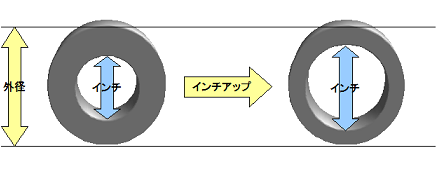
Inch up means increasing the wheel diameter (inches); inch down means the opposite. With a different wheel diameter, your previous tires cannot be used, so you will need new tires that fit the new wheels.
How to choose the new tires #
Keep the change in overall tire diameter (outer diameter) to a minimum #
The speedometer derives speed from the tire’s rotation. If the tire diameter changes, the speedometer becomes inaccurate. Some error is permitted, but choose a size that keeps the error small.
The tire’s overall diameter is determined by the wheel diameter and the tire’s section height. The wheel diameter is easy to understand (it is the inch size), but the section height must be calculated from the tire size. See Aspect Ratio for how to work it out. You can also enter the size in the Tire Size Change Chart to get the diameter.
Watch the applicable rim width #
Every tire has a wheel width it is suited to. The optimal width is sometimes listed as the “standard rim width”. Within a range, pressure and the like can compensate, so it is listed under terms such as “applicable rim width” or “permitted rim width”. You can look it up in catalogs or on the tire maker’s website, so choose a wheel that suits the tire.
Watch the load index (LI) #
Inch ups often come with a lower load index. The load index shows the maximum load one tire can support; if it drops, the risk of a blowout and other hazards increases. A higher tire pressure can compensate to some extent. See Load Index for details. However, there is a limit to how high the pressure can go: the JATMA standard caps it at 2.4 kgf/cm2 (240 kPa). The limit printed on your tire varies by tire.
Pros and cons #
The pros and cons are debated all over the web. Below is a general summary to help when you consider the change. This site cannot take responsibility for any trouble that may arise from an actual change, so proceed at your own responsibility.
Pros #
- A smaller sidewall flexes less when steering, which tends to improve handling.
Cons #
- Vibrations previously absorbed by the sidewall are no longer absorbed, so the ride feels rougher.
- The tire volume shrinks, so the load index (LI) drops. On heavy vehicles this raises the risk of a blowout. To keep the LI, you can run a higher pressure or choose a slightly wider tire.
Regulations #
The “Notification Prescribing the Details of the Vehicle Safety Standards for Road Transport Vehicles (MLIT Notification No. 619)” states the following, so if the load index drops significantly the vehicle will fail inspection:
Article 167-4: The standards prescribed by the notification under Article 9, paragraph 2 of the Vehicle Safety Standards concerning the strength, skid resistance, and other performance of the pneumatic rubber tires of a motor vehicle shall be as set forth in the following items. (1) The load applied to a tire, calculated by dividing the axle load of the motor vehicle in its loaded condition by the number of wheels on that axle, shall not exceed the load capacity of that tire.